
Forex license jurisdictions, compared without hype.
No jurisdiction is best for everyone. This page lines up twelve places brokers commonly consider and describes each in neutral terms, so you can shortlist two or three before you speak to a lawyer or a regulator.

How to read the comparison
Category is a rough grouping: onshore regulators generally expect real offices, qualified staff and capital; midshore centres sit between; offshore registries are lighter on substance but may be harder to bank. Use it to shortlist, not to decide.
Credibility and market access
A well-known regulator can help with banks, payment providers and client trust, and it may open specific markets. A lighter registry may help you start sooner at lower cost. The right balance depends on your clients, your capital and how long you plan to build.
What changes over time
Rules, fees and expectations are revised, sometimes quickly. Treat anything you read here, including our own summaries, as a starting point and verify it with the regulator and with qualified counsel before acting.
Talking to regulators and advisers
Prepare a short summary of your business model, markets and people before you approach a regulator or lawyer. Ask what is allowed, what is required and what is recommended, and write the answers down. Good questions save time and reduce the cost of advice.
Jurisdictions compared
| Jurisdiction | Regulator | Category | Typical substance expectation | Often considered by |
|---|---|---|---|---|
| Dubai (DIFC) | DFSA | Onshore-style free zone | Higher: real office and qualified staff expected | Institutional-facing and MENA brokers |
| Abu Dhabi (ADGM) | FSRA | Onshore-style free zone | Higher: genuine local presence expected | Brokers wanting a UAE common-law base |
| Mauritius | FSC | Midshore | Moderate: local office and often local directors | Africa and Asia facing brokers |
| Seychelles | FSA | Offshore | Lighter: registered agent and office | Cost-conscious new brokers |
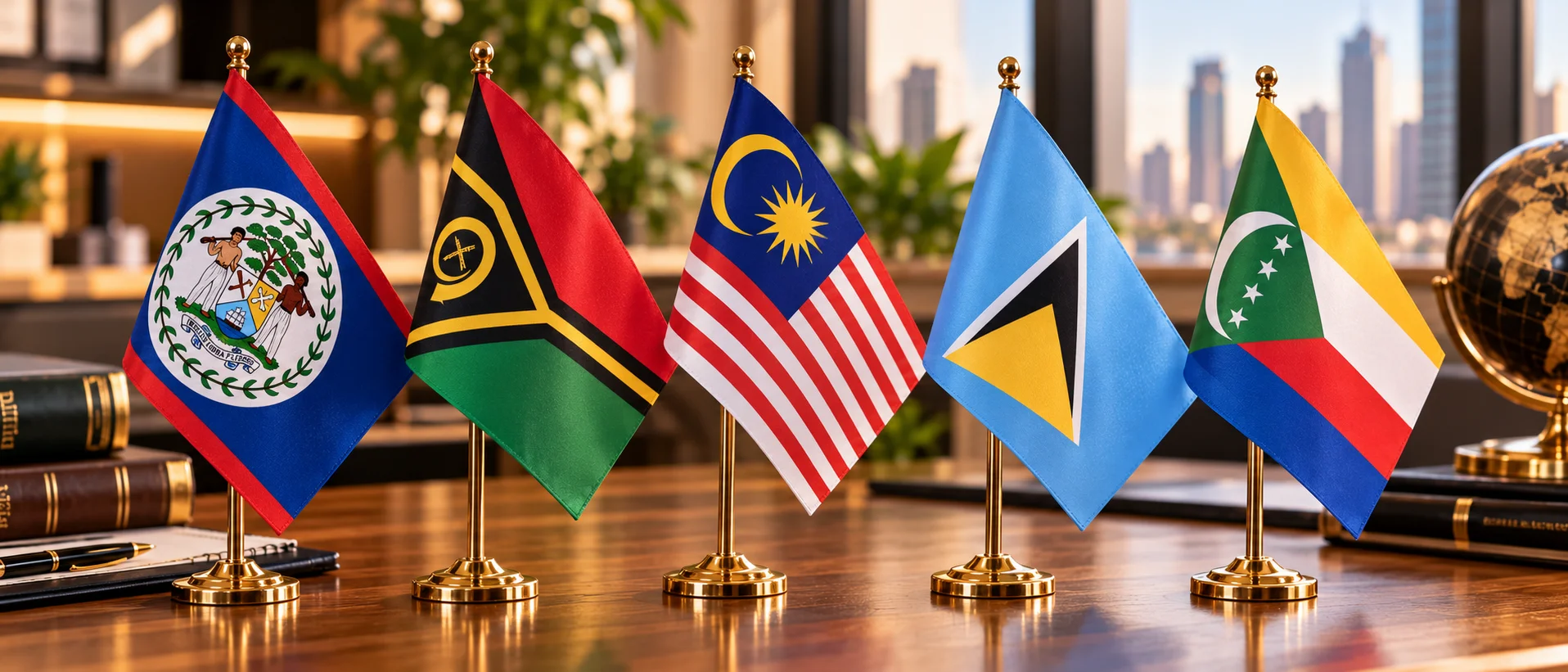
| St. Lucia | FSRA | Offshore | Lighter: registered agent | Early-stage brokers comparing options |
| Comoros (Anjouan) | AOFA | Offshore | Lighter: registered agent | Founders prioritising speed and low entry cost |
| Malaysia (Labuan) | LFSA | Midshore | Moderate: local office, staffing depends on licence | Southeast Asia facing businesses |
| United Kingdom | FCA | Onshore | High: UK presence, senior managers, capital | Established brokers needing top-tier credibility |
| Cyprus | CySEC | Onshore (EU) | High: local office, compliance officer, capital | Brokers seeking EEA market access |
| Australia | ASIC | Onshore | High: responsible managers, capital, local presence | Brokers targeting Australia and Asia-Pacific |
| Belize | IFSC | Offshore | Lighter: registered agent and office | Brokers wanting an established offshore option |
| Vanuatu | VFSC | Offshore | Lighter: registered agent and local office | New brokers wanting a straightforward start |
Questions we hear
Which jurisdiction is cheapest?
Offshore registries are usually cheaper to set up, but total cost includes banking, staffing, audit and compliance. Compare the full picture.
Can I hold more than one licence?
Some groups do. Each additional licence brings its own obligations, so add them for a reason.